


Sarasota Tree Pruning Specialists
Tree Pruning Warning!
Tree pruning is the most misunderstood practice in arboriculture. The primary cause of urban tree failure, disease, and premature death is substandard tree pruning. Cutting into a tree removes leaves, its food source, and results in open wounds exposing inner tissues to decay and disease.
But prune we must. Trees can be dangerous, they are messy, and branches get in the way. Tree Pruning is necessary so people and trees can coexist. We are essentially "domesticating" trees for the urban environment.
The good news is there are ways to prune that strengthen trees, minimize wounding, and still achieve our goals. Suncoast Tree Service utilizes AZNSI A300 pruning standards and pruning methods established by Dr. Ed Gilman and colleagues from over 30 years of research at the University of Florida.
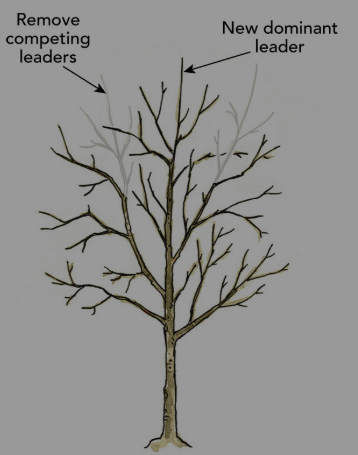
Pruning for Strong, Healthy Trees
-
Prescription Pruning Qualification (PPQ)
-
Certified arborists that hold the PPQ certification have received training and passed tests demonstrating knowledge of proper tree pruning
-
Tree pundits are lobbying for legislation to restrict tree pruning to only those holding the PPQ qualification
-
-
Structural Pruning
-
Extensive research from the University of Florida which include hurricane simulators show that good structure is the key to a tree's strength and vitality. The pruning methodology to achieve good structure can get technical. The overall idea is to train trees to achieve one dominant leader and horizontal, evenly spaced branches.
-
Older trees are more difficult to structurally train so we want to start right out of the nursery. Just a few strategically placed snips once a year is all it takes.
-
-
Don't over-prune!
-
Trees need their leaves to survive. Leaves provide chlorophyl, the energy source for the entire tree. When we strip the leaves, we starve the tree.
-
We want to minimize large pruning cuts. Pruning cuts remove a tree's protective layer exposing inner tissues to decay. Where we place our pruning cuts greatly affects the trees ability to close the wounds.
-
-

Size Control
Trees have to keep growing to survive. With few exceptions, trying to keep a large tree from getting big is like trying to keep an elephant small. Although there are some situations where crown reduction is warranted, the best method is to pick the right tree for the location before it's planted. If the tree or bush is growing too fast, a great alternative is to apply a Plant Growth Regulator (PGR).
-
Use crown reduction pruning sparingly and never say "topping"!
-
We may reduce the crown on an old, declining tree.
-
If a tree is blocking an important view
-
For formal, sheared crowns such as on ligustrum or holly trees
-
Crown reduction on fruit trees
-
-
Apply a Plant Growth Regulator (PGR)
-
An incredible, underutilized innovation in horticulture is the use of PGR's which can dramatically slow the growth of a tree or shrub. PGR's such as organic paclobrutazol not only slow stem elongation, but result in greener, denser foliage. Power companies have uses PGR's for years to slow growth around power lines.
-
Tired of constantly trimming your hedges? PGR's are an invaluable resource on large, fast-growing hedges such as pitch apple (Clusia) or sweet viburnum.
-
-
"Plant the right tree in the right place"
-
Unfortunately a lot of homebuilders install large tree species on small lots. They can quickly outgrow their space causing havoc above and below ground.
-
Plant the species that fits the location. For help finding the perfect tree, visit the tree ID section of this website.
-
-


Substandard Pruning Practices
-
Tree Topping
-
Topping trees has long been considered a big "no-no" in arboriculture. Topping a tree looks like a crime scene and can lead to shock, decay, weak branch formation and death.
-
Tree topping is prohibited in the City of Sarasota.
-
-
Lion's tailing
-
A common, poor pruning practice amongst tree services is to remove most of the trees inner branches and foliage in an attempt to thin the tree. The branches are left with a small bundle of leaves on the tips giving them the appearance of a "lion's tail." This is harmful to the tree. It removes vital inner leaves and tissues that feed the tree and aid in dampening high winds.
-
-
"Hurricane-cuts" on palm trees
-
Ever see palm trees hacked up leaving only a few palm fronds left? It looks horrible. These are called "hurricane-cuts" and the irony is it is exactly what you don't want to do for a hurricane. Palm trees are naturally hurricane resistant. Pruning off all those live fronds puts the tree into stress mode, leaving them susceptible to disease which can cause them to fall over.
-
-

Three Rules for Palm Pruning
-
Only remove dead fronds.
-
Palm trees need their leaves to stay healthy
-
A yellow or orange frond is not dead. That means it needs fertilizer. See the tree health care section for more details.
-
-
It's all about timing
-
Know the species of palm and it's flowering schedule.
-
Prune seed pods when they first emerge. It will prevent the messy pollen and fruit drop.
-
You can find fruiting periods for different palm species in the palm tree guide.
-
-
Sanitize pruning saws
-
Some palms like the Canary Island Date can get disease transfer through pruning saws
-
Don't take a chance and be sure to disinfect saws on certain species. See palm ID section
-
-

Palms in Turtle Rock


Owl Staring Me Down in Ocoee
